John Stuart Mill
Free Autobiography by John Stuart Mill — PDF EPUB Download
Free Autobiography John Stuart Mill PDF: The Education of a Philosopher
If you are searching for a free Autobiography John Stuart Mill pdf, you have found one of the most honest intellectual memoirs ever written. Published in 1873, the year of Mill's death, Autobiography tells the story of a child prodigy raised on Greek, Latin, and logic by his formidable father, James Mill, who grew into the great philosopher of liberty and utilitarianism. It is a book about education, ambition, a mental crisis that nearly destroyed its author, and the friendships that saved him. It is in the public domain in the United States, so you can download it legally and free in PDF and EPUB on Noveliopdf, with no account and no payment.
Mill's childhood is famous and, to modern readers, startling. He began learning Greek at three, Latin at eight, and by his early teens he was reading history, political economy, and logic, and helping his father edit Jeremy Bentham's manuscripts. He was not allowed the ordinary pleasures of childhood, and he was kept away from other children so that nothing would distract him from study. The result was one of the most learned young men in Europe, and also a young man who, at twenty, found himself asking a terrible question: if every reform he had been trained to pursue were achieved tomorrow, would he be happy? His honest answer was no, and the crisis that followed is the emotional centre of the book.
What Autobiography Is About
The first chapters of Autobiography describe Mill's extraordinary education in detail, and they are essential reading for anyone interested in how minds are formed. Mill is fair to his father: he admired James Mill's intellect and devotion, and he credits the education with giving him a head start of twenty-five years over his contemporaries. But he is also clear-eyed about its costs. He was trained to analyse everything and to feel very little, and when the crisis came, analysis could not save him. What did save him, he writes, was poetry, especially Wordsworth, and the discovery that feelings matter as much as thoughts. The passage in which he describes reading Wordsworth's poems and feeling the clouds lift is one of the most moving in all of nineteenth-century literature.
The second half of the book follows Mill's adult life: his work at the East India Company, his friendships with Jeremy Bentham, Thomas Carlyle, and other leading minds, his partnership with Harriet Taylor, and his emergence as the author of On Liberty and Utilitarianism. Mill writes about Harriet Taylor with deep love and respect, insisting that she was his intellectual equal and the co-author of his best ideas. He also writes frankly about his political career as a Member of Parliament and his campaigns for women's rights, set out most fully in The Subjection of Women. The book ends not with triumph but with quiet reflection on a life spent trying to make the world more rational and more free.
About John Stuart Mill
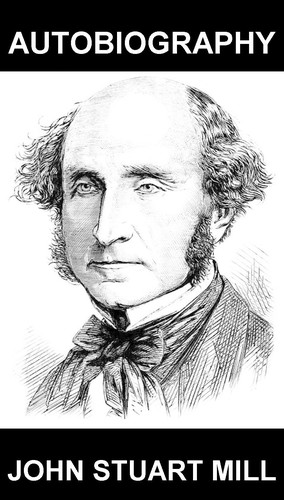
John Stuart Mill (1806-1873) was the most influential English-speaking philosopher of the nineteenth century. The son of the Scottish philosopher and historian James Mill, he was educated at home in London and never attended university, yet he became one of the most learned men of his age. He worked for the East India Company for thirty-five years, rising to a senior position, while writing the books that made him famous in his spare time. His System of Logic, published in 1843, established his reputation as a thinker, and On Liberty (1859) became the classic defence of individual freedom against the tyranny of the majority.
Mill's life was shaped by two great partnerships: with his father, who made him, and with Harriet Taylor, who remade him. After her death in 1858, he edited and published On Liberty as a memorial to their shared thinking, and he spent his final years campaigning for women's suffrage, proportional representation, and the rights of the working class. He died in Avignon in 1873, and his Autobiography was published a few months later. Because he died more than a century ago, all of his work is in the public domain, so a free Autobiography John Stuart Mill pdf is entirely legal to download and share.
The History of Autobiography
Mill wrote his Autobiography in the last years of his life, partly to set the record straight about his education and partly to explain how his opinions had developed. He was aware that his upbringing was already legendary, and he wanted readers to understand it from the inside rather than from gossip. The book was published in London in October 1873, five months after his death, and it was an immediate success, going through edition after edition. Victorian readers were fascinated by the story of the prodigy, and by Mill's frank account of his mental crisis, a subject rarely discussed in public at the time.
The book has been in print ever since, and modern readers value it for reasons Mill could not have foreseen. Psychologists cite it as an early account of depression and recovery. Educators debate it as a case study in what intensive early education can and cannot do. And general readers simply enjoy it as a well-told life, full of famous names, big ideas, and moments of real human warmth. It remains the best introduction to Mill the man, and the ideal companion to his philosophical works.
Why Readers Still Read Autobiography
Readers keep coming back to Autobiography because it speaks to questions every thoughtful person asks. How much of who we are is made by our upbringing, and how much can we remake ourselves? What happens when the goals we were trained to pursue turn out to be empty? Can reason and feeling be reconciled? Mill answers not with theory but with his own life, and his honesty about his mistakes makes the book unusually trustworthy. Students read it alongside On Liberty to understand where Mill's ideas came from, and general readers enjoy it as a window into Victorian intellectual life.
The book is also short, clear, and beautifully written, which makes it an excellent first Mill. If you enjoy it, read On Liberty for his defence of freedom, Utilitarianism for his moral philosophy, and The Subjection of Women for his pioneering argument for equality between the sexes.
How to Download Autobiography Free (PDF and EPUB)
You can download Autobiography free in PDF and EPUB on Noveliopdf. The PDF is ideal for reading on a computer or tablet and for printing, while the EPUB works on phones, e-readers, and apps, and can be sent to a Kindle. To get your free Autobiography John Stuart Mill pdf, open the book page, choose PDF or EPUB, and the file downloads directly while the website stays open, with no sign-up and no payment. The text comes from Project Gutenberg, the trusted public-domain library, so the edition is complete and legal.
If you arrived here by searching for an Autobiography free pdf download, you are in the right place: this Autobiography by John Stuart Mill free edition gives you the complete memoir in both formats, and the Autobiography free epub works on phones, tablets, and e-readers, while an Autobiography Mill pdf is the best choice for printing or reading on a larger screen.