James Joyce
Free Dubliners by James Joyce — PDF EPUB Download
Free Dubliners PDF: Joyce's Masterpiece of Ordinary Life
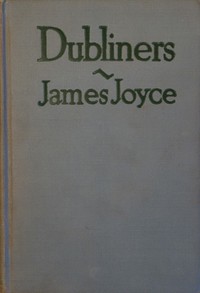
If you are looking for a free dubliners pdf, you have found one of the greatest short story collections ever written. Published in 1914, Dubliners gathers fifteen stories by James Joyce, all set in the Dublin he knew and loved, and all concerned with ordinary people in ordinary moments that suddenly reveal a whole life. The collection is in the public domain, which means you can download it legally and free in PDF and EPUB on Noveliopdf, with no account, no payment, and nothing to sign up for. Whether you are studying Joyce for a class, discovering his work for the first time, or looking for the original texts of "Araby", "Eveline", and "The Dead", this free dubliners pdf is the perfect place to begin.
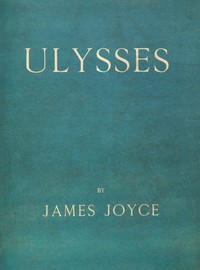
The stories follow a deliberate pattern, moving through childhood, adolescence, maturity, and public life, as if Joyce were taking us on a tour of a whole city and a whole lifetime. The collection opens with "The Sisters", in which a young boy confronts his first experience of death, and moves through stories of schoolboys, young lovers, clerks, drinkers, and dreamers, each one caught in a moment of what Joyce called paralysis, the feeling of being stuck in a life that has closed around you. The final story, "The Dead", is the longest and the most famous, a Christmas party that ends with one of the most beautiful and haunting passages in all of English literature. Between the first story and the last, Joyce builds a portrait of Dublin so complete that it anticipates the ambition he later set himself for Ulysses — a picture of the city so faithful that if Dublin were destroyed, it could be rebuilt from his book alone.
What Dubliners Is About
Dubliners is about the moments when ordinary life suddenly reveals its meaning. Joyce called these moments epiphanies: sudden revelations in which a character sees the truth of their situation, often too late to change it. A boy realises that his romantic dreams are empty. A young woman stands at the docks, about to leave Ireland with a sailor, and cannot bring herself to board the ship. A clerk spends a night drinking and comes home to take out his frustrations on his small son. A man at a Christmas party learns that his wife once loved someone else, a boy who died young, and that his own life has been, in a sense, lived in the shadow of the dead. These are small events, but Joyce writes them with such precision and sympathy that they feel enormous, and his famous style, plain on the surface, musical underneath, makes even the most ordinary scene shimmer with significance.
The book is also about Dublin itself, and about Ireland at a moment of change. Joyce wrote the stories between 1904 and 1907, when Ireland was still part of the British Empire and Dublin was a city of poverty, drink, religion, and frustrated ambition. His characters are trapped by money, by the Church, by family, by politics, and by their own fear, and Joyce shows that entrapment without ever preaching about it. He lets the details speak: the smell of a boarding house, the sound of a song in a pub, the cold air of a winter street. No one had written about ordinary city life with this kind of honesty before, and few have matched it since.
Araby: The Story Everyone Searches For
Many readers come to Dubliners for a single story, "Araby", and it is worth knowing why this short tale is one of the most studied and most searched stories in English literature. "Araby" tells of a young boy who becomes infatuated with his friend Mangan's sister and promises to bring her a gift from the Araby bazaar, a grand fair that has come to Dublin. The boy begs his uncle for money, arrives late, and finds the bazaar almost closed, its stalls shuttered and its lights going out. In the final lines he realises, with a rush of shame and anger, that he has been a fool, that his romantic dream was empty, and that he is, in his own words, driven and derided by vanity. It is a story of first love and first disillusionment, told in a few pages, and it has become a staple of school and university courses because it contains, in miniature, everything Joyce does best: the precise observation, the sudden epiphany, and the quiet devastation of the ending.
"Araby" is also the perfect introduction to Joyce for readers who find his later work intimidating. Unlike Ulysses, which is long and famously difficult, "Araby" can be read in fifteen minutes, and its story is simple and moving on its own terms. Yet it rewards re-reading: every detail has been chosen with care, and the story's final image, the boy standing alone in the darkened hall, is one of the most quoted moments in modern literature. If you have been assigned "Araby" for a class, this free dubliners pdf gives you the complete story, in its original context, alongside fourteen more stories that show the same genius at work in different keys. And if you have never read Joyce at all, "Araby" is the ideal place to start.
Why Dubliners Still Matters
Dubliners still matters because it changed what the short story could do. Before Joyce, the short story was often a vehicle for plot, for twists and surprises; after Joyce, it became a vehicle for consciousness, for the inner life, for the moments that do not look like much from the outside but change everything on the inside. Every modern short story writer, from Chekhov's admirers to the writers of today, owes something to this book. It also matters because its portrait of ordinary life has never dated: the frustrations, the small hopes, the sudden revelations, and the quiet tragedies of Joyce's Dubliners are the frustrations and hopes of people everywhere, in every city, in every generation.
For students, Dubliners is one of the most rewarding books in the English curriculum. The stories are short, the language is clear, and the themes, paralysis, epiphany, religion, politics, love, and death, are rich enough for endless discussion. Whether you read it for "The Dead", for "Araby", or for the collection as a whole, Dubliners stays with you long after you have finished it.
About James Joyce
James Joyce was born in Dublin in 1882 and left Ireland as a young man, living in Trieste, Zurich, and Paris, but he never stopped writing about the city of his birth. Dubliners, published in 1914 after years of struggle with publishers and printers, was his first book of fiction, and it was followed by A Portrait of the Artist as a Young Man, his great novel Ulysses, published in 1922, and his final work, Finnegans Wake. Joyce revolutionised the novel with his use of stream of consciousness, his attention to the inner life, and his belief that the ordinary day of an ordinary person could contain the whole of human experience. He died in 1941, and his reputation has only grown since: Ulysses is now widely regarded as the greatest novel of the twentieth century, and Dubliners is regarded as the greatest short story collection of the modern age. Readers who love this book will find Ulysses free on Noveliopdf, though they should be warned that it is a much longer and more demanding journey.
How to Download Dubliners Free in PDF and EPUB on Noveliopdf
Downloading your free Dubliners pdf on Noveliopdf takes less than a minute. Open the book page for Dubliners, choose the PDF or EPUB button, and the file downloads straight to your device while the website stays open, so you can keep browsing for your next read. The PDF is ideal for reading on a computer or tablet and for printing, while the EPUB works beautifully on phones, e-readers, and reading apps, with adjustable text size and bookmarks. Both files are the complete, unabridged collection, in the public domain, so the download is completely legal and completely free. There is no account to create and nothing to pay. If you enjoy these stories, try Ulysses for Joyce's masterpiece, The Great Gatsby for another great work of the same era, or The House of Mirth, all free in PDF and EPUB on Noveliopdf.