John Keats
Free Keats Poems 1820 PDF Download — Ode to a Nightingale, Ode on a Grecian Urn & To Autumn
Read it free on Noveliopdf — no sign-up needed.
What Is Keats: Poems Published in 1820?
When readers search for a free Keats poems 1820 pdf, they are looking for one of the most celebrated books of poetry in the English language. Keats: Poems Published in 1820 is the third and last volume John Keats saw in print, published in London in July 1820, less than a year before his death. It gathers the poems of his great final burst of creativity, including Lamia, Isabella, The Eve of St. Agnes, and the odes that made his name: To a Nightingale, On a Grecian Urn, To Autumn, and more. It is the book in which Keats reached the height of his powers, and it remains the essential Keats collection for students and general readers alike.
The volume is short enough to read in a few sittings, yet it contains some of the most famous poems ever written in English. Every poem in it is anthologized, quoted, and set for study somewhere, and the book as a whole shows a young poet moving from strength to strength in a matter of months. If you want to understand why Keats is ranked with Shakespeare and Milton, this is the book to read, and the free Keats poems 1820 pdf on Noveliopdf makes it available to everyone.
The Odes: Nightingale, Grecian Urn, and To Autumn
The heart of the 1820 volume is the group of odes Keats wrote in the spring of 1819. "Ode to a Nightingale" begins with the poet listening to a nightingale singing in a Hampstead garden, and moves through longing for escape, for wine, for death, and finally back to the ordinary world, ending on a note of wondering whether the whole experience was a vision or a waking dream. Its images, the "beaded bubbles winking at the brim" of the wine, the "warm South" where the bird sings, and the "viewless wings of Poesy," have become part of the language. Students searching for an Ode to a Nightingale free pdf will find the poem here in its original book form.
"Ode on a Grecian Urn" turns from a living bird to a work of art: an ancient Greek vase covered with scenes of lovers, musicians, and a sacrifice. Keats imagines the figures frozen forever, the lovers always about to kiss and never growing old, and closes with the famous lines, "Beauty is truth, truth beauty." "To Autumn," written in September 1819 after a walk near Winchester, is often called the most perfect short poem in English: a rich, unhurried portrait of the season of mists and mellow fruitfulness, written without a trace of self-pity even though Keats already knew he was dying. The other odes in the volume, To Psyche, On Melancholy, and On Indolence, complete a sequence that shows Keats thinking hard about beauty, sorrow, and the imagination.
Lamia, Isabella, and The Eve of St. Agnes
Alongside the odes, the 1820 volume contains three longer narrative poems that show a different side of Keats. "Lamia" tells of a serpent-woman who takes human form to win the love of a young Corinthian, and is exposed at their wedding feast by the philosopher Apollonius, in a story about illusion, reason, and the price of seeing things clearly. "Isabella; or, The Pot of Basil" retells a tale from Boccaccio's Decameron, in which a young woman buries her murdered lover's head in a pot of basil and waters it with her tears, a story of love and grief told with lush, sensuous detail.
"The Eve of St. Agnes," the most beloved of the three, is a medieval romance: on a bitterly cold night, the young Madeline dreams of her lover as she sleeps, while Porphyro steals into her chamber and wakes her with music, and the two escape together into the storm. Keats fills the poem with colour, cold, and candlelight, and with some of his most musical verse. Together, the three narratives show Keats as a storyteller as well as a lyric poet, and they give the volume a variety and richness that a book of odes alone could not match.
John Keats: a Short Life, a Lasting Fame
John Keats was born in London in 1795, the son of a stable keeper, and he trained as a surgeon and apothecary before giving up medicine for poetry. His first volume, Poems 1817, attracted little notice, and his long poem Endymion was mocked by reviewers when it appeared in 1818. Yet in the space of about a year, from the spring of 1819 to the summer of 1820, Keats wrote nearly all the poems for which he is remembered, an outpouring that has no equal in English poetry for speed and quality.
By the time the 1820 volume appeared, Keats was already ill with tuberculosis, the disease that had killed his mother and his younger brother Tom. In September 1820 he sailed to Italy in search of a warmer climate, and he died in Rome in February 1821, aged only twenty-five. He asked that his gravestone bear no name, only the words "Here lies one whose name was writ in water." The judgement could hardly have been more wrong: within a generation he was recognised as one of the greatest English poets, and the 1820 volume, his last book, became the foundation of his fame.
Why Students and Readers Still Search for the 1820 Poems
The 1820 poems are set for study in schools and universities around the world, which is why so many readers search for a Keats odes free pdf or an Ode on a Grecian Urn pdf before exams and essays. The poems reward that attention: they are rich in imagery and music, but they are also clear in their feelings, and a first-time reader can enjoy them without a commentary. "To Autumn" is a favourite with teachers because it can be read as pure description or as a meditation on ripeness and death, and "Ode to a Nightingale" is often the first Romantic poem students truly fall in love with.
Beyond the classroom, the poems speak to anyone who has felt the pull between beauty and mortality. Keats wrote them knowing he had little time, and that knowledge gives even his happiest lines a quiet urgency. His idea of "negative capability," the ability to live with uncertainty and mystery without reaching for easy answers, has become a touchstone for writers and readers alike. Whether you come to the book for study or for pleasure, it repays slow reading, and a free digital copy lets you carry it everywhere and return to a favourite poem whenever you like.
How to Download Keats Poems 1820 Free (PDF and EPUB)
You can download Keats: Poems Published in 1820 free on Noveliopdf in both PDF and EPUB formats. The book is in the public domain in the United States, because Keats died in 1821, so the download is completely legal and free, with no account, subscription, or payment needed. The EPUB version is ideal for e-readers and phones, including Kindle through the Send to Kindle service, while the PDF keeps the layout fixed and is easy to read on a computer or tablet, or to print for study.
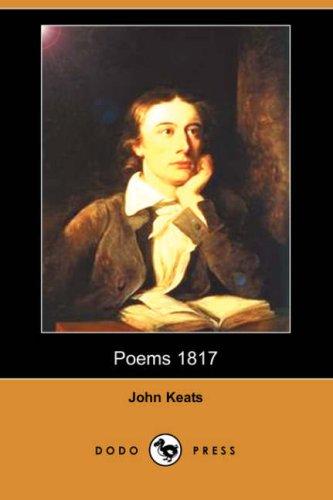
To get your copy, visit the book page, choose EPUB or PDF, and the file will download while the website stays open. If you want more Keats, try Poems 1817, his first volume, or Endymion, the long romance whose opening line about a thing of beauty is one of the most quoted in English. For more great nineteenth-century poetry, Men and Women by Robert Browning offers dramatic monologues that make a fine companion to Keats's odes.