Plutarch
Free Plutarch's Morals by Plutarch — PDF EPUB Download
Free Plutarch's Morals PDF: Timeless Essays on Living Well
If you are searching for a free Plutarch's Morals pdf, you have found one of the most loved collections of wisdom in all of classical literature. Plutarch's Morals gathers the great Greek biographer's essays on how to live well, from the education of children to the control of anger and the love of virtue. Written with warmth and practical wisdom, these essays have guided readers for nearly two thousand years. The collection is in the public domain, so you can download it free in PDF and EPUB on Noveliopdf, legally and with no account, no payment, and no trial to cancel. Whether you are reading philosophy for the first time, looking for practical guidance, or exploring the ancient world, this free Plutarch's Morals pdf is a timeless companion.
Plutarch's Morals is the English title given to the Moralia, the collection of essays, dialogues, and lectures that Plutarch wrote alongside his famous Lives of great Greeks and Romans. Where the Lives tell the stories of statesmen and generals, the Moralia asks a different question: how should a person live? The essays cover the whole of human life. One essay gives advice on the education of children, arguing that character matters more than cleverness and that good habits must be planted early. Another, on the control of anger, shows how rage clouds judgement and offers practical steps for mastering it. There are essays on tranquillity of mind, on how to profit from one's enemies, on superstition, on the love of wealth, on marriage, and on the eating of flesh. There are lively dialogues, including the famous Table-Talk, in which guests at dinner debate questions great and small, and collections of curious inquiries, such as the Roman Questions and the Greek Questions, which ask why old customs exist. Through them all runs Plutarch's voice: humane, curious, and full of common sense.
What Plutarch's Morals Is About
The heart of Plutarch's Morals is practical ethics, the art of living a good life day by day. Plutarch was not a philosopher of abstract systems. He was a teacher and a priest, a man who believed that philosophy should help ordinary people with ordinary problems: how to raise a child, how to keep a friend, how to bear bad luck, how to grow old gracefully. His essays are full of stories and examples drawn from history, and he loves to show how great men and women behaved in small moments as well as great ones. In his essay on anger, for example, he tells how the philosopher who learned to pause before speaking saved himself from a lifetime of regret, and he advises the reader to practise the same pause. In his essay on education, he insists that children should be taught to love learning for its own sake, and that parents should choose their children's friends and teachers with the greatest care. In his essay on tranquillity, he argues that peace of mind comes not from wealth or power, which are uncertain, but from expecting little and being grateful for what one has. It is advice that sounds as fresh today as it did in the ancient world, because human nature has not changed.
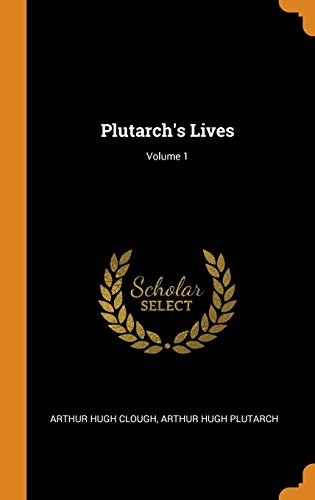
Readers who come to the Moralia after Plutarch's Lives will find the same author in a different mood. Plutarch's Lives, his parallel biographies of Greek and Roman statesmen, is the work that most readers search for, and it made Plutarch one of the most influential writers in Western history. But the Moralia shows the private Plutarch: the father, the friend, the priest, and the teacher, thinking aloud about the conduct of life. The two works belong together, and readers who love the Lives will find the Morals even more intimate and useful. Where the Lives ask what makes a great leader, the Morals ask what makes a good person, and the second question, Plutarch believed, matters more. Together, the Lives and the Morals give a complete picture of a mind that has guided readers from the ancient world to the present day.
Why Plutarch's Morals Still Matters
Plutarch's Morals still matters because it speaks to the oldest questions in the world in the plainest language. How do I control my temper? How do I raise my children? How do I stay calm when things go wrong? These are not questions that modern life has answered, and Plutarch's answers, offered with humour and humility, still work. His essays were loved by the great essayists who followed him: Michel de Montaigne, the inventor of the modern essay, called Plutarch his favourite author and borrowed from him constantly, and writers from Shakespeare to Emerson learned from his pages. The Moralia also matters because it preserves so much of the ancient world. Plutarch quotes lost books, retells old stories, and describes customs that would otherwise be forgotten, so that reading him is like walking through a museum in which every object comes with a story. And above all, the Morals matters because it is good company. Plutarch writes like a wise and kindly friend, and readers who spend time with him often find that his voice stays with them long after the book is closed.
About Plutarch
Plutarch was born around the year 46 CE in the small Greek town of Chaeronea, and he lived there for most of his life, dying around 120 CE. He was a Greek writing under the Roman Empire, a priest at the great sanctuary of Delphi, and a man who moved easily between Greek and Roman worlds. His great work, the Parallel Lives, pairs a Greek and a Roman statesman, from Alexander and Caesar to Demosthenes and Cicero, and compares their characters. But he also wrote the essays of the Moralia, served as a magistrate in his home town, and taught philosophy to the young men who came to study with him. He was, in every sense, a public man: a citizen, a priest, and a teacher, who believed that learning should serve life. His influence on the Western world is immense. Shakespeare drew on his Lives for his Roman plays, including Julius Caesar and Antony and Cleopatra, and his essays shaped the moral thought of Europe for centuries. His other books on Noveliopdf, above all Plutarch's Lives, show the same humane intelligence, and readers who love the Morals will find a lifetime of wisdom in the rest of his work.
How to Download Plutarch's Morals Free in PDF and EPUB on Noveliopdf
Downloading your free Plutarch's Morals pdf on Noveliopdf takes less than a minute. Open the book page for Plutarch's Morals, choose the PDF or EPUB button, and the file downloads straight to your device while the website stays open, so you can keep browsing for your next read. The PDF is ideal for reading on a computer or tablet and for printing, while the EPUB works beautifully on phones, e-readers, and reading apps, with adjustable text size and bookmarks. Both files are the complete, unabridged essays, in the public domain, so the download is completely legal and completely free. There is no account to create and nothing to pay. If you enjoy this one, try Plutarch's Lives for his great biographies, or Meditations and Letters from a Stoic for two more ancient guides to living well, all free in PDF and EPUB on Noveliopdf.