Petr Kropotkin
Free The Conquest of Bread by Petr Kropotkin — PDF EPUB Download
Free The Conquest of Bread PDF: Kropotkin's Hopeful Classic of a Fairer World
If you are searching for a free the conquest of bread pdf, you have found one of the most influential works of political thought ever written. Published in 1892, The Conquest of Bread is the great classic of anarchist thought, in which the Russian prince and scientist Petr Kropotkin argues that food, shelter, and security should belong to everyone, and that society can run without bosses or wages. The book is in the public domain in the United States, which means you can download it legally and free in PDF and EPUB on Noveliopdf, with no account, no payment, and no trial to cancel. Whether you are studying political philosophy, curious about anarchism, or looking for a hopeful vision of how the world could be organized differently, this free PDF EPUB download is the place to start.
Kropotkin begins with a simple observation: the world already produces enough for everyone. Modern farms, factories, and workshops can feed, clothe, and house the whole human race, yet millions go hungry while a few grow rich. The problem, he argues, is not scarcity but the system that turns the fruits of common labour into private property. His answer is radical and, in his telling, entirely practical: let everyone take what they need from the common store, let everyone contribute a few hours of work a day to the common good, and let communities organize themselves by free agreement instead of by orders from above. There would be no wages, because wages turn human beings into commodities; no bosses, because free people do not need masters; and no poverty, because poverty is not natural but made. It is a vision of a society built on mutual aid, the same cooperation that Kropotkin saw everywhere in nature and in human history.
What The Conquest of Bread Is About
The book is organized as a series of clear, readable chapters, each taking on one part of the argument. Kropotkin opens by showing how rich the world already is, then moves through the practical questions: how food would be produced and shared, how housing would be organized, how clothing and comfort would be provided, and how work itself could be transformed. One of his most famous chapters argues for agreeable work, the idea that labour need not be miserable drudgery, and that if everyone shared the necessary work, each person would need to work only a few hours a day, leaving the rest of life for study, art, and pleasure. He writes about the division of labour, the decentralization of industry, and the future of agriculture, drawing on history, science, and everyday life. What makes the book so readable is that Kropotkin never writes like a distant theorist: he gives examples, tells stories, and invites the reader to imagine a different world in concrete, everyday terms.
The book's history is part of its appeal. Kropotkin originally wrote it in French, and it first appeared as a series of articles in the anarchist journal Le Revolte, before being published as a book in Paris in 1892, with a preface by the great geographer Elisee Reclus, who also suggested the title. Between 1892 and 1894 it was serialized in English in Freedom, the London journal Kropotkin helped to found. Since then it has become a classic of political literature, read by generations of activists, students, and dreamers, and it played a real part in history, inspiring the anarchist militias of the Spanish Civil War and echoing in movements from the Paris Commune's grandchildren to the Occupy protests of our own century. It is a book that has outlived every attempt to dismiss it, because its central question has never gone away: if we can produce enough for all, why do so many have so little?
Why Read The Conquest of Bread
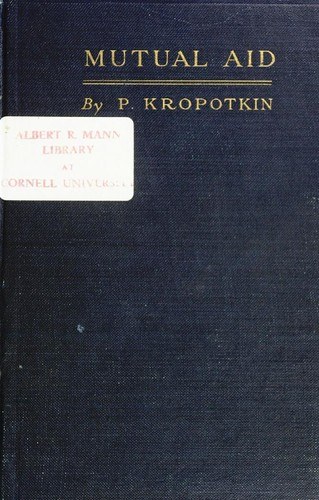
Readers come to The Conquest of Bread for many reasons, and the book rewards all of them. Students of politics read it because it is the clearest statement of anarchist communism ever written, the foundation text of a whole tradition of thought. Readers of economics read it because it challenges the most basic assumptions of the market, the idea that scarcity is natural and competition is inevitable, and argues, with evidence from biology and anthropology, that cooperation is the deeper human instinct. And ordinary readers pick it up because it is hopeful: unlike so much political writing, which is angry or despairing, Kropotkin's book is warm, generous, and full of faith in ordinary people. His companion work, Mutual Aid, develops the scientific side of the argument, showing how cooperation, not competition, drives evolution itself. Together, the two books make a complete case for a kinder world.
About Petr Kropotkin
Petr Kropotkin was born in Moscow in 1842, a prince of one of Russia's oldest noble families, and he gave up wealth and privilege to become a scientist, a geographer, and a revolutionary. As a young officer he served in Siberia, where he took part in geographical expeditions across the wild country, and the experience changed him: he saw how peasants and hunters survived through cooperation, and how little they needed the state. He became one of the great geographers of his age, and then one of the great theorists of anarchism, writing books, pamphlets, and articles for the rest of his life. He lived much of his adult life in exile in England, returning to Russia only after the revolution of 1917, and he died in 1921. His work has never been more widely read than it is today.
How to Download The Conquest of Bread Free in PDF and EPUB on Noveliopdf
Downloading your free the conquest of bread pdf on Noveliopdf takes less than a minute. Open the book page for The Conquest of Bread, choose the PDF or EPUB button, and the file downloads straight to your device while the website stays open, so you can keep browsing for your next read. The PDF is ideal for reading on a computer or tablet and for printing, while the EPUB works beautifully on phones, e-readers, and reading apps, with adjustable text size and bookmarks. Both files are the complete, unabridged book, in the public domain in the United States, so the download is completely legal and completely free. There is no account to create and nothing to pay. If you enjoy this one, try Mutual Aid for Kropotkin's great scientific companion to this book, or The Republic for Plato's founding vision of the just society, both free in PDF and EPUB on Noveliopdf.